Best Topwater Rods: A Complete Guide
Specific rod picks for walking baits, frogs, poppers, big swimbaits, and Japanese seabass surface fishing, drawn from a 12,276-rod catalog and cross-checked across 41 brands.
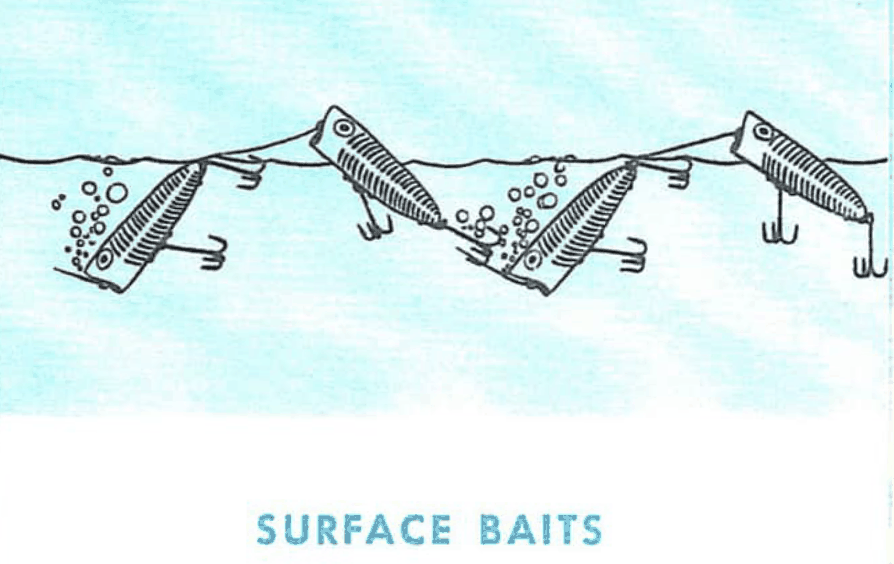
Topwater fishing is a discipline of pause and recovery. The bait sits idle, the angler sets cadence with the rod tip, and the strike happens at the surface where the rod's job changes mid-cast. The blank needs enough tip flex to walk a stickbait or pop a chugger without killing its action, enough backbone to drive a hook home through a frog skirt or an inhaled popper, and the right length to manage line on slack-line presentations. Getting any one of those properties wrong is enough to miss the bite.
A topwater rod is more specialized than a "general-purpose bass rod" sold under that label. Fast or moderate-fast action serves the cadence work most surface presentations require, lure-weight ratings cluster in the 0.25–1 oz window for the majority of techniques, and length sits in a clear sweet spot between 6'10" and 7'5" for accuracy work. The catalog data confirms it: 49% of the 3,688 topwater-relevant rods indexed sit in the 7'0"–7'5" length band, and 81% carry an M or MH power label.
This guide picks specific rods from the database, explains why each one fits a given technique, and surfaces the brand-by-brand patterns that determine where the deep options actually live. Every recommendation links back to its detail page.
What makes a rod good for topwater
Four properties matter more than any others. The catalog data shows where the consensus picks cluster, but the underlying mechanics drive the choice.
| Property | Why it matters for topwater | Ideal range |
|---|---|---|
| Action | Fast (F) or moderate-fast (MF) recovers the tip cleanly between cadence twitches, keeping the bait's action alive on pauses. Extra-fast can over-power a soft-pop cadence; pure moderate flexes too deep on the hookset. | F or MF |
| Power | M and MH cover roughly 80% of mainstream topwater (chuggers, walking baits, buzzbaits, prop baits). H/XH is frog-and-swimbait territory where the hookset must drive through weed mats. L/ML is for small surface and trout work where the bait masses 1/8 oz or less. | M to MH (general), H (frog), L (finesse) |
| Length | 7'0"–7'3" is the casting-accuracy sweet spot, where the rod can flick a Spook into pocket water without giving up line management. 7'4"–7'11" suits frogging and big swimbaits where distance and hookset leverage matter more than precision. Below 6'10" trades distance for tight-cover control; above 8' loses the precise rod-tip cadence walking baits need. | 6'10" to 7'5" most common |
| Tip sensitivity | Surface strikes register through the line as much as the blank, but a livelier tip helps detect the bait's rhythm at long range and reads the difference between a swipe and a committed eat. Solid-glass tips are common on dedicated topwater builds. | Graphite blank, sensitive tip preferred |
| Rod type | Casting dominates: 89% of explicitly-tagged topwater rods in the catalog are casting. Spinning fills the small-popper and micro-surface niche and most of the inshore saltwater surface lineup. | Casting unless going light/inshore |
Topwater techniques and the rods they call for
The catalog's M/MH cluster hides eight distinct topwater disciplines, each with its own ideal rod shape. The cards below cite the catalog brands with the strongest depth in each technique.
Walking baits
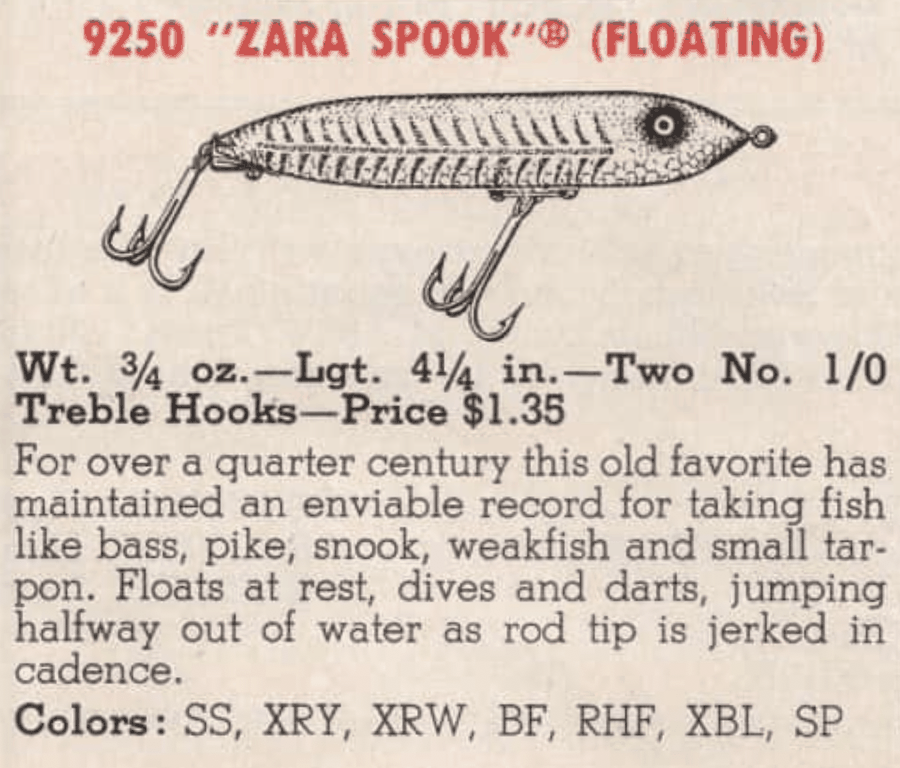
Pencil/stickbait surface lures (Zara Spook, Sammy, Sebile) worked with a dog-walk cadence.
Poppers & chuggers
Cup-faced lures (Pop-R, Rebel Pop-R, Storm Chug Bug) worked with a spit-and-pause cadence.
Top depth: Daiwa, Lew's, Fenwick, Abu Garcia.
Buzzbaits and prop baits
Wire-bait surface burners (Strike King Tour Grade Buzzbait) and Devils Horse-style props. Steady retrieve, no cadence work.
Top depth: St. Croix, Dobyns, 13 Fishing, Lew's.
Hollow-body frogs
SPRO Bronzeye, Scum Frog, Snag Proof worked through pads and mat. Heaviest topwater discipline.
Top depth: St. Croix, G. Loomis (with named "IMX Pro Topwater Frog"), Dobyns.
Big-bait surface & wakes
Wakebaits, glide baits worked just under, larger wood-bodied surface lures. Heavy gear, slow cadence.
Top depth: G. Loomis (IMX Pro Swimbait), Daiwa (Dx Swimbait), Okuma (Guides Select).
Micro topwater & finesse
Small pencils, tiny poppers for trout, panfish, smallmouth pressured by larger lures.
Top depth: Daiwa Presso, Major Craft, Tsurinoya.
Japanese seabass surface
Pencil baits and slim poppers in saltwater for seabass. Longer rods, lighter line, precise lure control.
Top depth: Daiwa Saltiga Inshore, Major Craft, Shimano.
Stream trout topwater
Dry-fly analogs, surface minnows, tiny pencils in mountain streams. Tight-quarters casting, light line.
Top depth: Daiwa Presso, Tsurinoya, Major Craft, MiFine.
The best topwater rods
Eight specific picks from the catalog, each chosen for a distinct topwater discipline. Every rod links to its database entry where you can verify the specs, see the Buy button, and compare against same-power siblings.
G. Loomis IMX Pro Topwater IMX-PRO 802C TWR
Why this rod. It is one of the only series in the catalog with "Topwater" in the series name, and the spec philosophy shows in the lighter power (M, not MH) and shorter length (6'8"). G. Loomis built it specifically for working light walking baits and small poppers with cadence precision rather than distance. The lighter power keeps a 3/8-oz Spook alive on the pause; the shorter length lets you pick a target through laydowns.
For: the angler who fishes walking baits as a primary technique and wants the specific tool rather than an MH adapted into the role.
Megabass Brand New DESTROYER F5.1/2-72X
Why this rod. The DESTROYER's blank profile (taper, recovery, tip stiffness) is engineered to handle multiple cadence styles cleanly. MH power covers the broad 1/4–1 oz topwater window that includes nearly every walking bait, popper, buzzbait, and prop bait an angler would throw on a single rod. The 7'2" length sits at the catalog median, balancing accuracy and reach. Premium Japanese components, Fuji titanium and Toray carbon, at a meaningfully higher price than US workhorses.
For: the angler who fishes multiple topwater techniques and wants one specialist-grade rod that handles all of them without compromise.
G. Loomis IMX Pro Topwater Frog IMX-PRO 884C TWFR
Why this rod. Catalog's only series named explicitly for frogging. The H power and 7'4" length drive a hookset through hollow-body skirts and pads at distance, while the fast action keeps tip movement crisp for the chug-and-pause cadence frogs need. 3/8–3/4 oz covers small to mid-size frogs cleanly without the over-built feel of an XH flipping stick adapted into a frog role.
For: the angler who fishes pads, mats, and shallow grass and wants a dedicated frog rod rather than a converted flipping stick.
St. Croix Bass X BACX710HF
Why this rod. St. Croix builds the deepest H-power frogging lineup in the catalog (94 H rods across the brand's topwater set). The Bass X 7'10" H is the catalog's most-cost-efficient pure frog stick, with the same length and action as Legend Tournament siblings at half the price. The wider 3/4–3 oz lure rating gives it cross-over capability for big swimbait and heavy buzzbait work that the dedicated frog rod loses.
For: the angler who wants frogging capability without committing to a $300+ specialist rod, and who occasionally throws bigger surface baits.
Daiwa TD Sol Inshore TDSOL76MHFS
Why this rod. Daiwa's TD Sol Inshore line is built around saltwater topwater for snook, redfish, speckled trout, and inshore tarpon. The 7'6" length gives the long-cast distance needed for working pencil baits on coastal flats, and the spinning configuration handles the heavy braid + fluorocarbon leader combo that inshore work requires. 3/8–1 oz covers the 1/2-oz Top Dog, 3/4-oz Skitter Walk, and most popular inshore surface lures.
For: the inshore saltwater angler who fishes pencil baits and topwater walks for snook or redfish.
Daiwa Saltiga Inshore Travel SATRIN703MHFS
Why this rod. Travel-format flagship from Daiwa's Saltiga line. The Saltiga blank carries Japan's surface-lure design philosophy: moderate-fast action for cadence work, lighter power that pairs with PE 1-2 braid, and a length tuned for precise lure control on slim pencils and slim poppers. The 3-piece travel construction makes it the rare premium topwater spec that fits in a carry-on. Built specifically for the Japanese seabass surface tradition described in section 6 below.
For: the angler chasing Japanese seabass (suzuki), or an inshore angler wanting JDM topwater philosophy without importing direct.
KastKing Perigee II KRDCSTPG2-7MH2-D
Why this rod. The catalog's cleanest sub-$60 topwater spec. Standard MH 7'0" Fast geometry, 3/8–1 oz lure window that covers most mainstream topwater (walkers, poppers, prop baits, buzzbaits), and KastKing's twin-tip variant means one rod handles both M and MH duties via swappable tip. KastKing leads the budget tier with 136 topwater-relevant rods in the catalog, the deepest budget lineup measured.
For: anyone testing topwater as a discipline, or an angler who wants a backup rod that won't make them flinch when it slides off the boat.
Daiwa DX Swimbait DX801HFB
Why this rod. Catalog's go-to for wakebaits and large surface plugs (BBZ-1, S-Waver topwater, large Whopper Plopper). The 8'0" length adds the lever the cast needs for 4–6 oz baits, and the H power resists the headshakes a 5-lb striped bass or large pre-spawn smallmouth puts on a big wake. Pairs naturally with 65 lb braid and a leveler reel for slow-rolled surface work.
For: the West Coast big-bait angler or anyone targeting 5-lb-plus bass with surface presentations beyond 2 oz.
Choosing your topwater rod
Three buying scenarios cover most readers. The match-up between scenario and recommended rod is direct.
| Scenario | Spec target | From section 4 |
|---|---|---|
| First topwater rod. Do-everything pick covering walkers, poppers, buzzbaits, and prop baits on a single rod | 7'0"–7'2" · MH · F · 3/8–1 oz · Casting | Megabass DESTROYER F5.1/2-72X (specialist), KastKing Perigee II 7'0" MH (budget) |
| Dedicated frog setup. Pads, mats, shallow grass, hollow-body frogs on 65–80 lb braid | 7'4"–7'11" · H · F · 3/8–3/4 oz · Casting | G. Loomis IMX Pro Topwater Frog 884C (specialist), St. Croix Bass X 710HF (value) |
| Japanese surface / saltwater specialist. Seabass, inshore, light pencil and popper work | 7'0"–7'6" · MH · F · 3/8–1 oz · Spinning | Daiwa Saltiga Inshore Travel 703MHFS (premium), Daiwa TD Sol Inshore 76MHFS (mid-tier) |
Two adjacent scenarios are worth noting. Big-bait topwater (wakebaits, S-Waver topwater, large Whopper Plopper) needs the 8'0" H/XH casting tier and points at the Daiwa DX Swimbait or G. Loomis IMX Pro Swimbait. Micro-surface for trout and finesse points at the UL/L Daiwa Presso line, which sits outside this guide's main scope but covers a genuine angling discipline.
Common mismatches and mistakes
Over-powering the cadence rod. The most common topwater error: buying an H "frog rod" and adapting it for walking baits and poppers. The H power's tip is too stiff to keep a 3/8-oz Spook walking cleanly on the pause; the bait sits, then jerks, instead of zig-zagging. MH is the right power for cadence work; H is the right power for frogs. Don't try to make one rod do both.
Under-powering the frog. The mirror mistake: throwing a 3/4-oz frog on a MH 7'0" casting rod. The hookset reaches the fish through 6 feet of pad mat and a hollow rubber skirt; MH doesn't drive the hook hard enough through that, and the result is consistent missed fish. The catalog's H 7'10" specs exist for this reason.
Confusing power and action. A fast-action MH and a moderate-fast-action MH resist the same load before they bend; they just bend in different shapes. For topwater specifically, action affects cadence feel (fast recovers between twitches better than moderate-fast for walking baits) while power affects hookset and lure-weight rating. Buying for one and getting the other is a setup-day surprise.
Specialist tip with one rod. The data shows the MH 7'0"–7'2" casting rod handles roughly 80% of mainstream topwater. If you're starting, buy that one. The temptation to immediately add a 7'10" H for frogs and a 6'8" M for walkers is real, but most anglers fish three techniques per season; the budget is better spent on better line and better reels for the one rod that does them all.
Always read the lure-weight range, not just the power letter. Some pike, muskie, and saltwater conventions share power labels with bass topwater rods but carry vastly different lure ratings; a "MH" rated to 40+ oz is a muskie/jigging blank that happens to share a letter with the MH walking-bait sticks you actually want. The fix is reading the lure-weight column on every catalog entry before picking up the rod.
Quick-reference card
Topwater rod × technique reference
| Technique | Power | Action | Lure (oz) | Length | Type | From §4 |
|---|---|---|---|---|---|---|
| Walking baits | M-MH | F/MF | 1/4–3/4 | 7'0"–7'3" | Casting | G. Loomis IMX Pro Topwater 802C |
| Poppers / chuggers | M-MH | F | 1/4–5/8 | 6'10"–7'2" | Casting / Spinning | Megabass DESTROYER F5.1/2-72X |
| Buzzbaits / props | MH | F | 3/8–3/4 | 7'0"–7'4" | Casting | Megabass DESTROYER F5.1/2-72X |
| Hollow-body frogs | H | F | 3/8–1 | 7'4"–7'11" | Casting | G. Loomis IMX Pro Topwater Frog 884C |
| Big-bait wake / surface | H-XH | F/MF | 2–8 | 7'6"–8'0" | Casting | Daiwa DX Swimbait DX801HFB |
| Inshore saltwater | MH | F | 3/8–1 | 7'0"–7'6" | Spinning | Daiwa TD Sol Inshore TDSOL76MHFS |
| Japanese seabass | MH | F | 3/8–1 | 7'0"–7'6" | Spinning | Daiwa Saltiga Inshore Travel 703MHFS |
| Stream / micro surface | UL-L | F/XF | 1/32–1/4 | 5'4"–6'6" | Spinning | Daiwa Presso Ultralight |
FAQ
- What action is best for topwater fishing?
- Fast (F) or moderate-fast (MF) action. Fast recovers the tip cleanly between cadence twitches and keeps walking baits and poppers working on the pause. Moderate-fast is a defensible alternative when the rod doubles for crankbait or jerkbait duty. Extra-fast can overpower a soft popper cadence and is better suited to frogs and big-bait work.
- Can you use a Medium rod for topwater?
- Yes, for smaller walking baits and 1/4-oz poppers. The catalog M-class median lure rating is 0.25–0.75 oz, which covers most subtle topwater work. For frogs, big buzzbaits, or wake baits, step up to MH or H.
- What's the difference between a frog rod and a topwater rod?
- A frog rod is one specific kind of topwater rod, set up for the heaviest discipline. Frogs need H power (vs MH for general topwater), 7'4"–7'11" length (vs 7'0"–7'2"), and a stiffer tip to drive a hookset through pad mat. A "topwater rod" without qualification usually means an MH casting stick for walkers, poppers, and buzzbaits.
- Is casting or spinning better for topwater?
- Casting dominates: 89% of explicitly-tagged topwater rods in the catalog are casting. Casting reels handle the bulkier baits, give better accuracy with 1/4 oz and up, and pair better with braid for frog work. Spinning has its niche in micro-surface, inshore saltwater pencil baits, and any presentation with line lighter than 10 lb.
- What lure weight does a topwater rod need to handle?
- Most mainstream topwater sits between 0.25 and 2 oz. A 3/8–1 oz MH rod covers walkers (1/2 oz Spook), poppers (3/8 oz Rebel Pop-R), buzzbaits (3/8–5/8 oz), and prop baits in one rating. Frogs add the 3/8–1 oz upper range, big wakes push to 4 oz and beyond.
- What length topwater rod is best?
- 7'0"–7'3" is the catalog sweet spot: 1,805 of the 3,594 length-rated topwater rods (50%) fall in that band. Shorter than 6'10" trades distance for tight-cover control (some Japanese walking-bait specialists at 6'8"). Longer than 7'5" suits frogging and big-bait work where leverage matters more than precision.
- Do I need a separate frog rod?
- If you fish pads and mats more than a few times a season, yes. The 7'4"–7'11" H casting rod is built for a specific hookset profile that MH gives up. If you frog occasionally and walk topwater often, an MH 7'2" is the compromise; you'll miss the occasional frog fish in pad cover but you'll catch more walking-bait fish.
- What's special about Japanese topwater rods?
- JDM (Japanese Domestic Market) topwater rods emphasize sensitivity, moderate-fast actions, and lighter power than US analogs. The reason is the surface culture itself: clear-water bass, stream trout, and inshore seabass on slim pencils and small poppers, where presentation precision matters more than horsepower. Useful for cross-over saltwater anglers and anyone fishing pressured clear water.